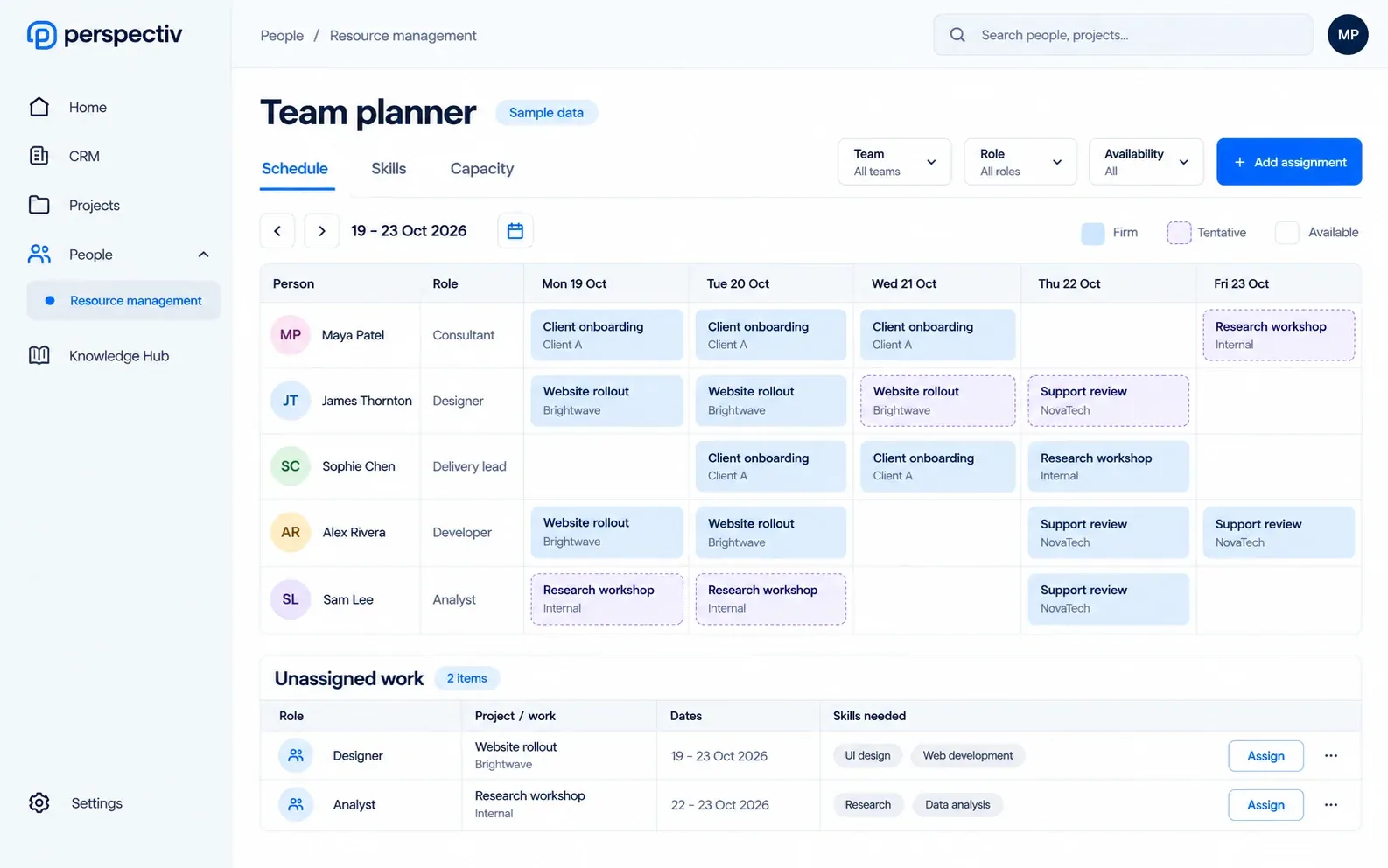
Supply and demand
On one side is capacity: the hours your people are available, by role, skill and location. On the other is demand: work already won and work in the pipeline. Resource planning matches the two and shows the gaps.
Tentative and firm bookings
Not every booking is certain. Booking people tentatively against likely work lets you see future pressure without promising anyone. When the work is confirmed, the booking becomes firm.
Plan by skill, not just by name
Early on, plan demand by role and skill (“a senior data engineer for six weeks”) rather than by person. Assign names closer to the start date. That keeps the plan honest when people’s availability changes.
Look at the right horizon
Week-by-week views are for staffing. Month-by-month and quarter-by-quarter views are for hiring and sales: they show whether the firm will run short of a skill before it happens.
Warning signs
- The same people are always overbooked
- Work is won before anyone checks who can do it
- Bench time spikes between projects
- Hiring happens after projects are already late
Connect it to the rest of the business
Resource plans are only as good as their inputs. When skills come from people records, demand from won and likely work, and actuals from timesheets, the plan stays current. See how to measure utilization.
How Perspectiv helps
Labels show what opens first in the private beta (Q2 2027), what is being built now, and what is on the roadmap.
- Resource managementComing soon
Availability, scheduling, staffing, capacity, utilization and pipeline-driven demand.
- WorkforceComing soon
Employee, contractor and subcontractor records, jobs, positions, an org chart and issued equipment.
- CRMBeta Q2 2027
Accounts, contacts, leads and opportunities, with every activity on the client’s timeline and opportunity forecasting.